Introduction
Project
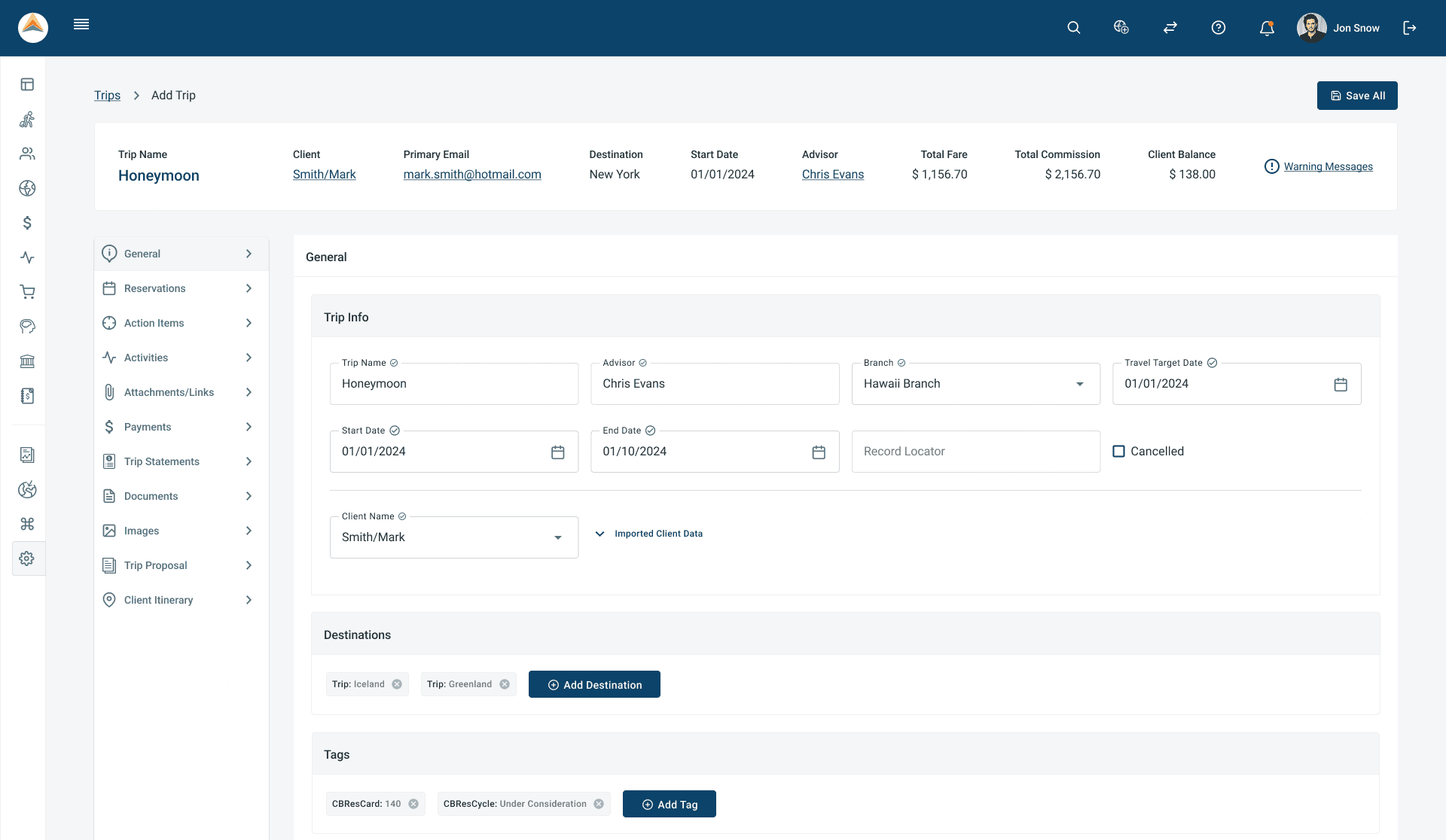
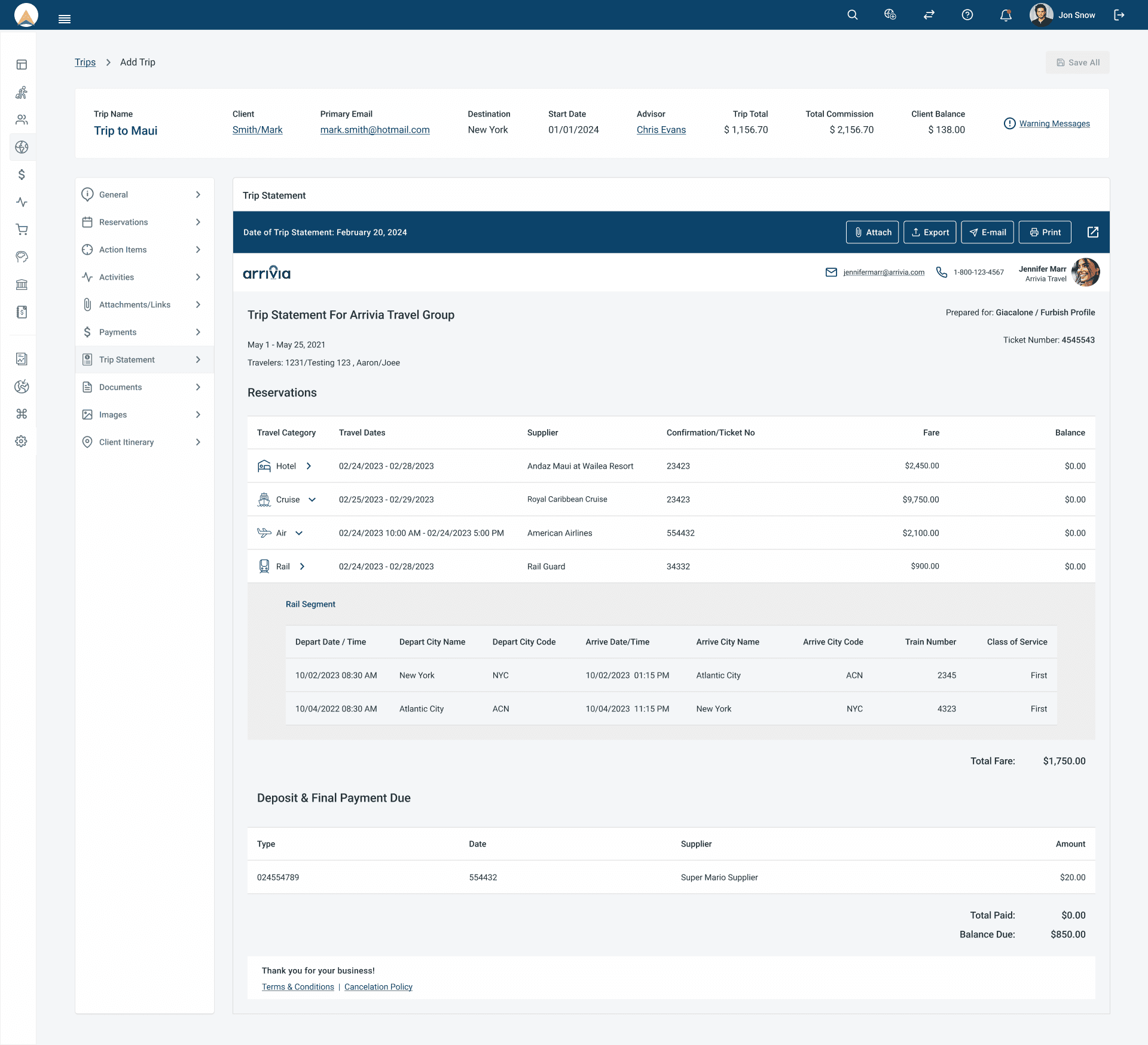
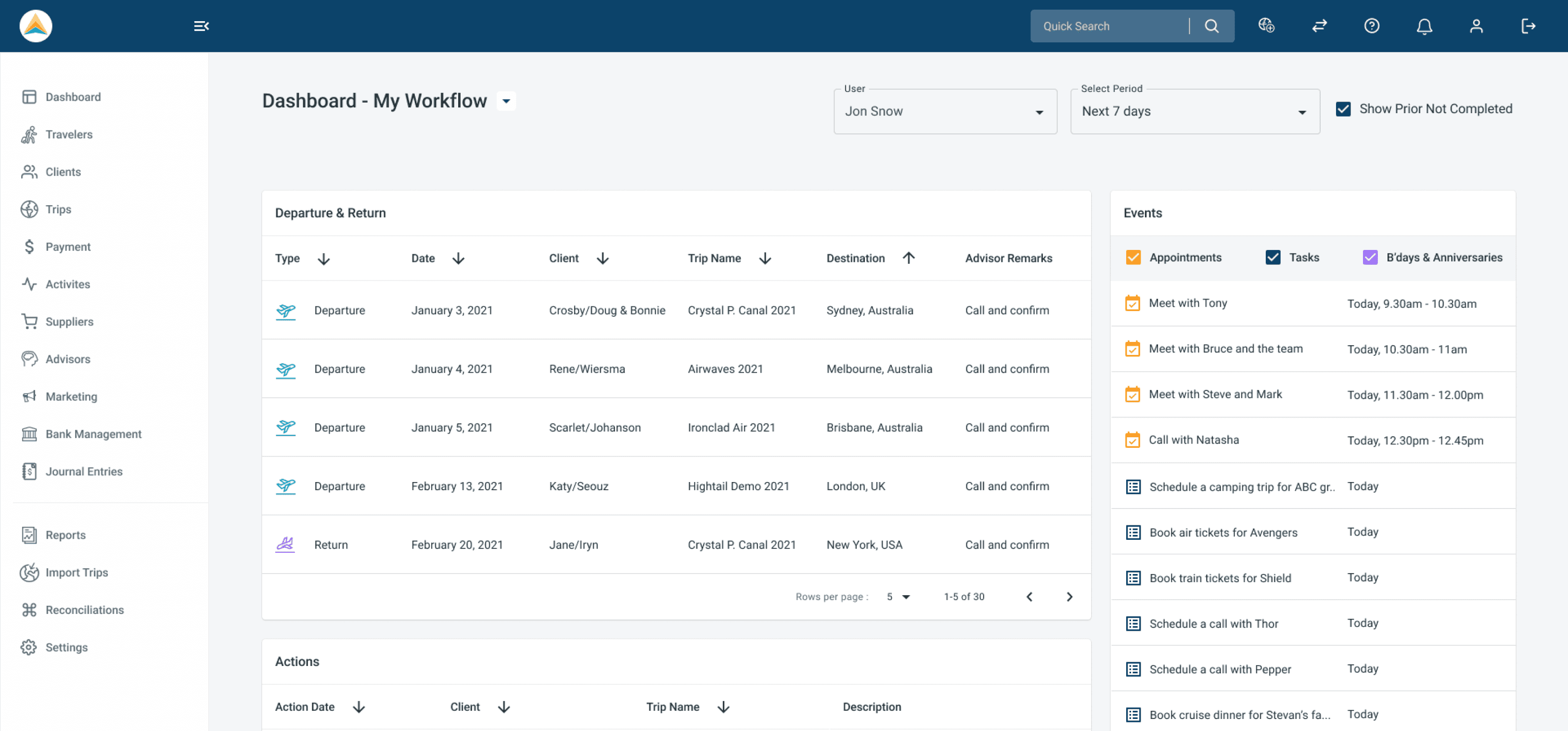
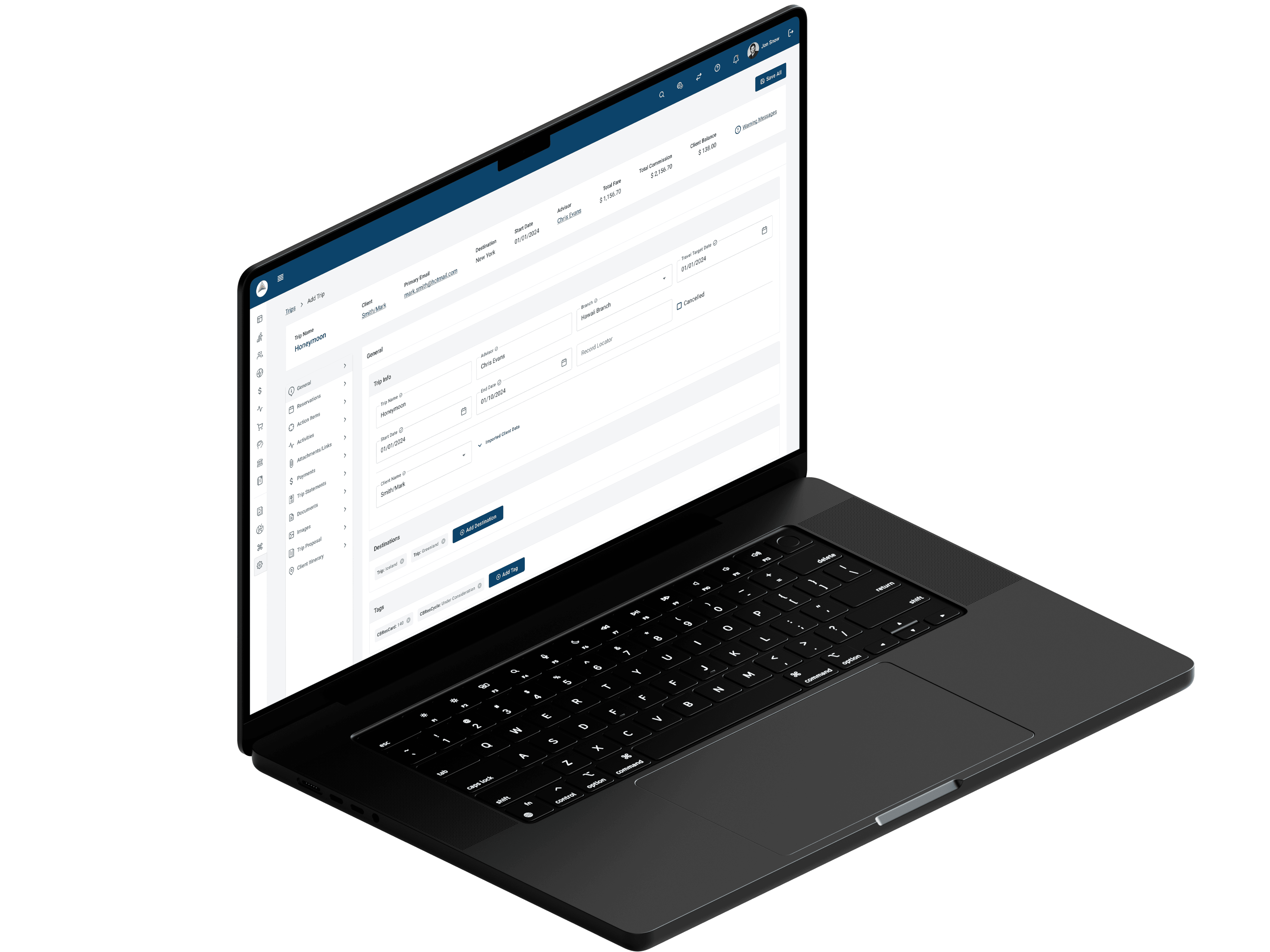
Reimagining Tres meant taking a legacy desktop tool & turning it into a modern & intuitive web platform.
One that empowers travel agents with smarter ways to manage their business.
Reimagining Tres meant taking a legacy desktop tool & turning it into a modern & intuitive web platform.
One that empowers travel agents with smarter ways to manage their business.
Team
Design: Lead Product Designer (my role), 1 additional Designer
Engineering: 5 Frontend & Backend Developers, 1 Tech Lead
Product: 3 Product Owners
Project Management: 1 Project Manager
Design: Lead Product Designer (my role), 1 additional Designer
Engineering: 5 Frontend & Backend Developers, 1 Tech Lead
Product: 3 Product Owners
Project Management: 1 Project Manager
Timeline: 3 years
Tools

Figma
Figma

Whimsical
Whimsical

Azure
Azure
Research & Discovery
To understand the needs of travel agents and the limitations of the legacy system, we conducted extensive user research, competitive analysis, and experience map
To understand the needs of travel agents and the limitations of the legacy system, we conducted extensive user research, competitive analysis, and experience map
User Interviews
We interviewed 10 travel agents who actively used the original Tres CRM. Our goal was to understand their workflows, frustrations, and tool usage.
We interviewed 10 travel agents who actively used the original Tres CRM. Our goal was to understand their workflows, frustrations, and tool usage.
Key Pain Points Identified

Manual data entry from external tools (email, calendars, booking engines)
Manual data entry from external tools (email, calendars, booking engines)
No way to track client interactions across different channels (email, calls, messages)
No way to track client interactions across different channels (email, calls, messages)
No integration with modern tools like Google Calendar or email marketing systems
No integration with modern tools like Google Calendar or email marketing systems
Outdated, unintuitive interface that slowed down onboarding and daily tasks
Outdated, unintuitive interface that slowed down onboarding and daily tasks
“I use four different tools just to manage one client. Tres doesn’t talk to any of them.”
– Senior Travel Agent
“It feels like using a system built a decade ago. Everything takes longer than it should.”
– Junior Agent
“I use four different tools just to manage one client. Tres doesn’t talk to any of them.”
– Senior Travel Agent
“It feels like using a system built a decade ago. Everything takes longer than it should.”
– Junior Agent
User Personas

Melissa Thompson
Melissa Thompson
Senior Travel Agent
Senior Travel Agent
Age: 36
Age: 36
background
background
Melissa Thompson has been a travel agent for over 12 years, creating personalized itineraries and maintaining strong relationships with her clients. While confident with technology, she finds older systems frustrating due to manual work and disconnected tools. Melissa prefers solutions that simplify her tasks by organizing client information in one place, automating routine processes, and improving communication, helping her focus on providing smooth and memorable travel experiences.
Melissa Thompson has been a travel agent for over 12 years, creating personalized itineraries and maintaining strong relationships with her clients. While confident with technology, she finds older systems frustrating due to manual work and disconnected tools. Melissa prefers solutions that simplify her tasks by organizing client information in one place, automating routine processes, and improving communication, helping her focus on providing smooth and memorable travel experiences.

"I need a system that brings everything together: clients, bookings, and communication in one place."
"I need a system that brings everything together: clients, bookings, and communication in one place."
Goals
Goals
Provide seamless, personalized travel experiences to her clients.
Minimize administrative overhead to focus on relationship building.
Stay competitive by using modern, integrated systems.
Provide seamless, personalized travel experiences to her clients.
Minimize administrative overhead to focus on relationship building.
Stay competitive by using modern, integrated systems.
Pain Points
Pain Points
Manual Data Entry: Duplication of work due to lack of integration between email, calendars, and booking systems.
Disjointed Communication: Difficulty tracking client interactions across multiple channels (email, phone, chat).
Time-Consuming Workflows: Rigid systems that don’t accommodate her need for customized client follow-ups.
Manual Data Entry: Duplication of work due to lack of integration between email, calendars, and booking systems.
Disjointed Communication: Difficulty tracking client interactions across multiple channels (email, phone, chat).
Time-Consuming Workflows: Rigid systems that don’t accommodate her need for customized client follow-ups.
background
background
Lucas Bennett is a junior travel agent with a background in tourism management, starting his career at a small travel agency. He thrives on organization but often feels overwhelmed by complicated software interfaces and repetitive tasks. Eager to learn and grow, Lucas appreciates tools that are easy to navigate, reduce manual effort, and help him manage client communication efficiently. With the right support, he is dedicated to delivering timely and accurate service to clients
Lucas Bennett is a junior travel agent with a background in tourism management, starting his career at a small travel agency. He thrives on organization but often feels overwhelmed by complicated software interfaces and repetitive tasks. Eager to learn and grow, Lucas appreciates tools that are easy to navigate, reduce manual effort, and help him manage client communication efficiently. With the right support, he is dedicated to delivering timely and accurate service to clients
"I need tools that work as hard and fast as I do, so I can focus on growing in my career."
"I need tools that work as hard and fast as I do, so I can focus on growing in my career."
Tools Used:
Tools Used:
Gmail, WhatsApp, Google Calendar, third-party booking engines
Gmail, WhatsApp, Google Calendar, third-party booking engines

Lucas Bennett
Lucas Bennett
Junior Travel Agent
Junior Travel Agent
Age: 27
Age: 27
Goals
Goals
Quickly onboard into CRM tools with minimal training.
Efficiently manage daily administrative tasks.
Provide accurate information and updates to clients in real time.
Quickly onboard into CRM tools with minimal training.
Efficiently manage daily administrative tasks.
Provide accurate information and updates to clients in real time.
Pain Points
Pain Points
Steep Learning Curve: Struggles to quickly adapt to outdated, complex CRM systems, requiring frequent guidance and extra time to complete tasks.
Disconnected Tools: Wastes time switching between multiple systems for simple operations like sending client reminders or updating itineraries.
Overcrowded Dashboards: Feels overwhelmed by cluttered interfaces that display irrelevant information, making it hard to focus on immediate tasks.
Steep Learning Curve: Struggles to quickly adapt to outdated, complex CRM systems, requiring frequent guidance and extra time to complete tasks.
Disconnected Tools: Wastes time switching between multiple systems for simple operations like sending client reminders or updating itineraries.
Overcrowded Dashboards: Feels overwhelmed by cluttered interfaces that display irrelevant information, making it hard to focus on immediate tasks.

Sofia Ramirez
Agency Manager
Age: 45
background
Olivia Carter is an experienced agency manager with a passion for streamlining operations and enhancing client satisfaction. With over 15 years of experience in the travel industry, she focuses on empowering her team with tools that increase productivity and provide actionable insights into client preferences. Olivia values modern CRM solutions that integrate with marketing platforms, automate repetitive tasks, and deliver performance analytics, ensuring her agency stays competitive in a dynamic market.
"A seamless system empowers my team to succeed and keeps our clients coming back."
Tools Used:
Outlook, shared spreadsheets, Slack, legacy CRM
Goals
Ensure agents have tools to maximize efficiency and reduce errors.
Gain insights into client data to improve service offerings.
Reduce operational costs while maintaining high service standards.
Pain Points
Limited Reporting Capabilities: it difficult to track agent performance and client engagement due to inadequate analytics and data visibility.
Disjointed Communication: Frustrated by systems that increase agent workload with repetitive tasks, leading to inefficiencies and higher operational costs.
Lack of Integration: Misses out on opportunities to engage with clients as the CRM doesn’t integrate with marketing or social media platforms.
Sofia Ramirez
Sofia Ramirez
Agency Manager
Agency Manager
Age: 45
Age: 45
background
background
Olivia Carter is an experienced agency manager with a passion for streamlining operations and enhancing client satisfaction. With over 15 years of experience in the travel industry, she focuses on empowering her team with tools that increase productivity and provide actionable insights into client preferences. Olivia values modern CRM solutions that integrate with marketing platforms, automate repetitive tasks, and deliver performance analytics, ensuring her agency stays competitive in a dynamic market.
Olivia Carter is an experienced agency manager with a passion for streamlining operations and enhancing client satisfaction. With over 15 years of experience in the travel industry, she focuses on empowering her team with tools that increase productivity and provide actionable insights into client preferences. Olivia values modern CRM solutions that integrate with marketing platforms, automate repetitive tasks, and deliver performance analytics, ensuring her agency stays competitive in a dynamic market.
"A seamless system empowers my team to succeed and keeps our clients coming back."
"A seamless system empowers my team to succeed and keeps our clients coming back."
Tools Used:
Tools Used:
Outlook, shared spreadsheets, Slack, legacy CRM
Outlook, shared spreadsheets, Slack, legacy CRM
Goals
Goals
Ensure agents have tools to maximize efficiency and reduce errors.
Gain insights into client data to improve service offerings.
Reduce operational costs while maintaining high service standards.
Ensure agents have tools to maximize efficiency and reduce errors.
Gain insights into client data to improve service offerings.
Reduce operational costs while maintaining high service standards.
Pain Points
Pain Points
Limited Reporting Capabilities: it difficult to track agent performance and client engagement due to inadequate analytics and data visibility.
Disjointed Communication: Frustrated by systems that increase agent workload with repetitive tasks, leading to inefficiencies and higher operational costs.
Lack of Integration: Misses out on opportunities to engage with clients as the CRM doesn’t integrate with marketing or social media platforms.
Limited Reporting Capabilities: it difficult to track agent performance and client engagement due to inadequate analytics and data visibility.
Disjointed Communication: Frustrated by systems that increase agent workload with repetitive tasks, leading to inefficiencies and higher operational costs.
Lack of Integration: Misses out on opportunities to engage with clients as the CRM doesn’t integrate with marketing or social media platforms.
Touchpoint Analysis
To understand the end-to-end experience of both travel agents and their clients, we conducted a touchpoint analysis mapping the full customer journey—from initial contact to post-travel engagement.
To understand the end-to-end experience of both travel agents and their clients, we conducted a touchpoint analysis mapping the full customer journey—from initial contact to post-travel engagement.
Tools Used:
Tools Used:
Gmail, WhatsApp, Google Calendar, third-party booking engines, Legacy CRM
Occasional use of WhatsApp or personal devices for urgent client communication
Gmail, WhatsApp, Google Calendar, third-party booking engines, Legacy CRM
Occasional use of WhatsApp or personal devices for urgent client communication
1.
Initial Inquiry: Clients reach out via email, phone, or online form.
→ Agents manually log inquiries in the CRM, often missing key client details or losing track across channels.
Initial Inquiry: Clients reach out via email, phone, or online form.
→ Agents manually log inquiries in the CRM, often missing key client details or losing track across channels.
2.
Proposal and Quoting: Agents research destinations, build itineraries, and send quotes.
→ Handled across disconnected tools (spreadsheets, PDFs, email), making it hard to track progress or version control.
Proposal and Quoting: Agents research destinations, build itineraries, and send quotes.
→ Handled across disconnected tools (spreadsheets, PDFs, email), making it hard to track progress or version control.
3.
Booking Confirmation: Finalizing bookings and sending confirmation details to clients.
→ No unified view of booking status or ability to track confirmations in one place.
Booking Confirmation: Finalizing bookings and sending confirmation details to clients.
→ No unified view of booking status or ability to track confirmations in one place.
4.
Pre-Travel Communication: Sending payment reminders, travel documents, and updates.
→ No automation for scheduled follow-ups; agents rely on manual reminders or third-party tools.
Pre-Travel Communication: Sending payment reminders, travel documents, and updates.
→ No automation for scheduled follow-ups; agents rely on manual reminders or third-party tools.
5.
During Travel Support: Clients contact agents for real-time help.
→ Support conversations happen over multiple channels (calls, texts, email), with no centralized record in Tres.
During Travel Support: Clients contact agents for real-time help.
→ Support conversations happen over multiple channels (calls, texts, email), with no centralized record in Tres.
6.
6.
Post-Travel Follow-up: Agents check in with clients, request feedback, or suggest future trips.
→ No built-in tools for post-trip engagement or re-marketing.
Post-Travel Follow-up: Agents check in with clients, request feedback, or suggest future trips.
→ No built-in tools for post-trip engagement or re-marketing.
This analysis revealed major gaps in automation, integration, and visibility across all stages. It highlighted the need for a unified platform where agents could manage every touchpoint from a single interface something the legacy version of Tres failed to provide.
This analysis revealed major gaps in automation, integration, and visibility across all stages. It highlighted the need for a unified platform where agents could manage every touchpoint from a single interface something the legacy version of Tres failed to provide.
By aligning these journey stages with user pain points, we laid the groundwork for a modern CRM solution that streamlines communication, automates tasks, and centralizes client interactions.
By aligning these journey stages with user pain points, we laid the groundwork for a modern CRM solution that streamlines communication, automates tasks, and centralizes client interactions.
Ideation and Concept Development
Ideation & Concept
Development
Problem Statement
Outdated and unintuitive: Tres, the legacy CRM, was difficult to use and lacked a modern user experience.
Outdated and unintuitive: Tres, the legacy CRM, was difficult to use and lacked a modern user experience.
Lack of integration: As a standalone system, it couldn’t connect with essential tools travel agents relied on, leading to fragmented workflows.
Lack of integration: As a standalone system, it couldn’t connect with essential tools travel agents relied on, leading to fragmented workflows.
Inadequate for modern needs: It didn’t support key functionalities like multi-channel communication, automated follow-ups, or real-time booking updates.
Inadequate for modern needs: It didn’t support key functionalities like multi-channel communication, automated follow-ups, or real-time booking updates.
Objective

To reimagine Tres as a modern, web-based, all-in-one CRM designed for today’s travel agents - improving automation, integrations, & usability.
To reimagine Tres as a modern, web-based, all-in-one CRM designed for today’s travel agents - improving automation, integrations, & usability.
Feature Ideation
Feature Ideation
Integrated client profiles: All touchpoints & interactions (emails, calls, bookings) in one view.
Automated workflows: Triggers for follow-ups & reminders at key points (booking confirmation, pre-travel updates).
Calendar and booking engine integration: Sync schedules & bookings automatically without manual input.
In-app communication: Enable agents to communicate with clients through the platform via email, chat, or Call)
Integrated client profiles: All touchpoints & interactions (emails, calls, bookings) in one view.
Automated workflows: Triggers for follow-ups & reminders at key points (booking confirmation, pre-travel updates).
Calendar and booking engine integration: Sync schedules & bookings automatically without manual input.
In-app communication: Enable agents to communicate with clients through the platform via email, chat, or Call)
Concept Exploration
We explored two primary layout concepts for the redesigned platform:
A tab-based system where agents could manage clients, bookings, and communication in separate sections.
dashboard-centered layout where all interactions and tasks could be managed from a single unified view.
After testing both approaches, we finalized a hybrid layout that combined the best of both:
A dashboard-first view with modular tabs for deeper management - allowing agents to stay focused while still accessing detailed tools when needed.
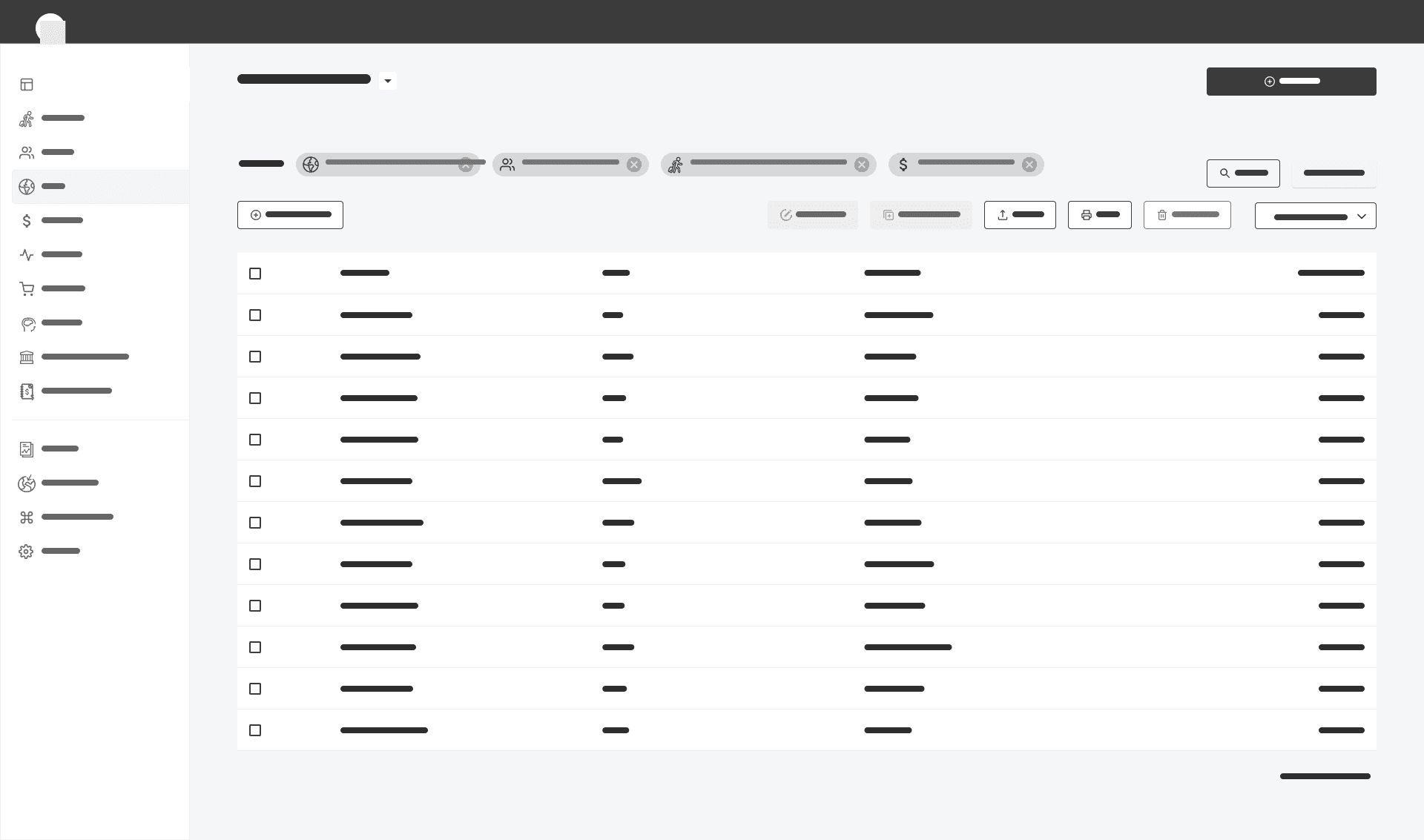
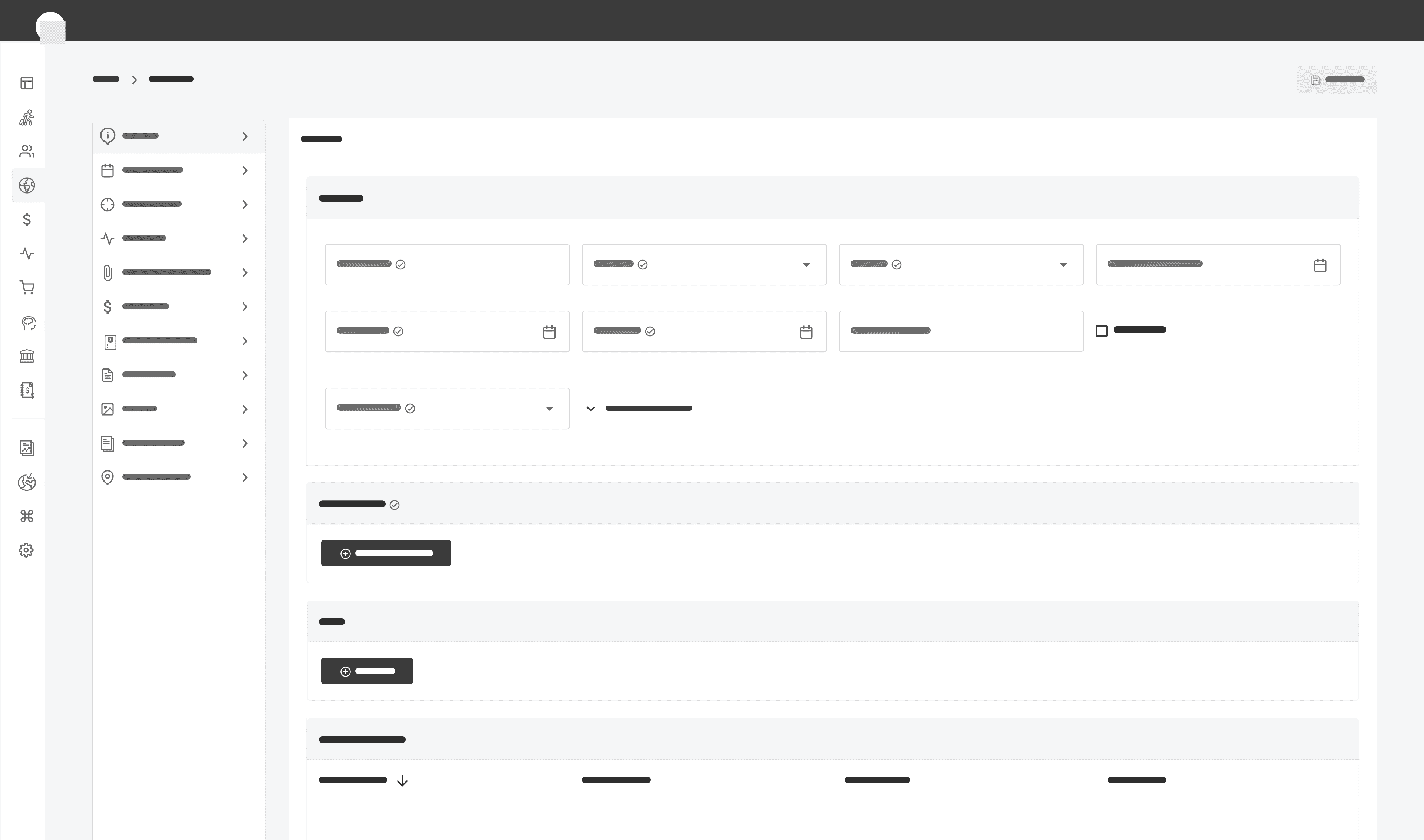
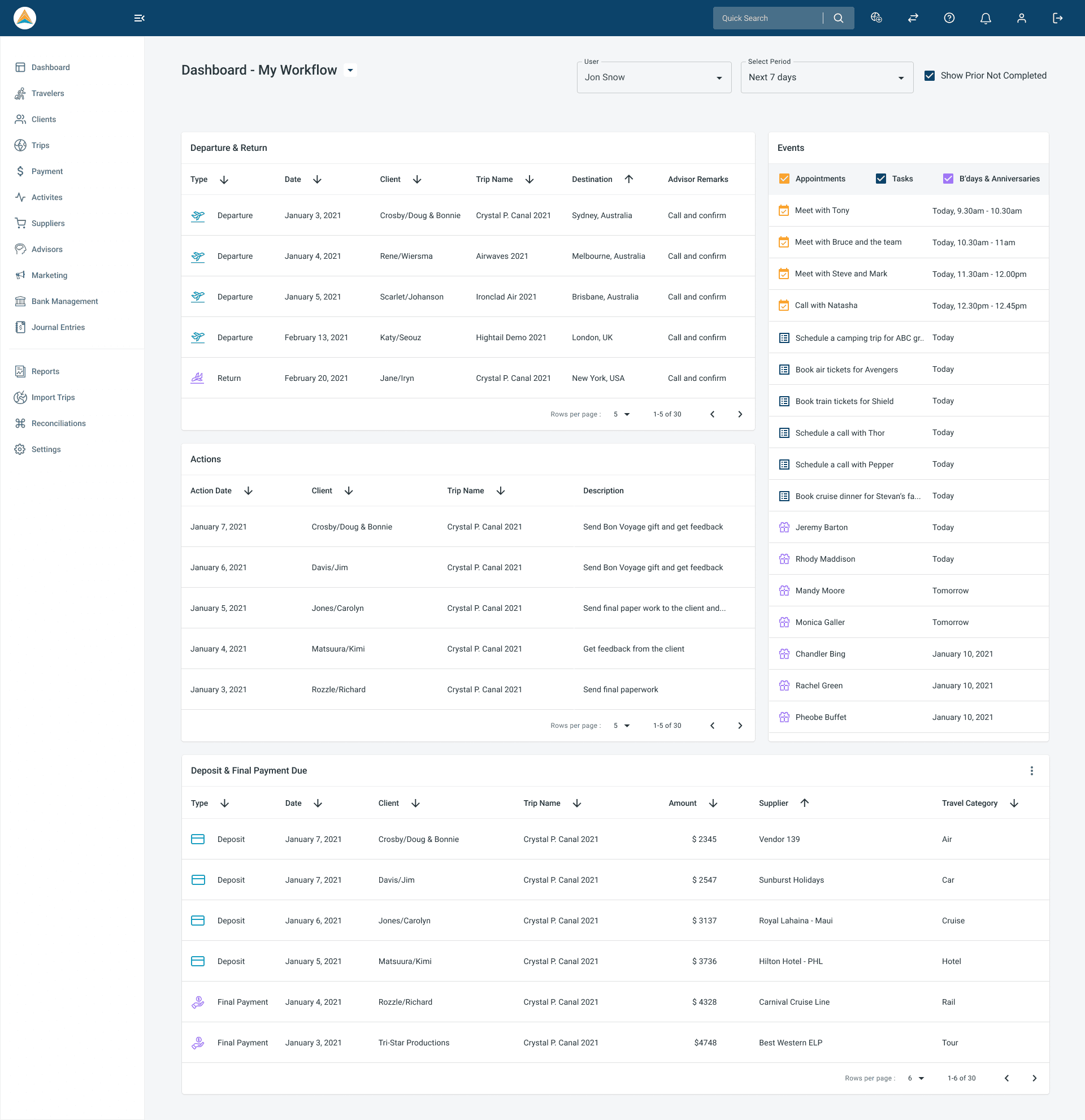
Developed mid-fidelity wireframes that showcased the new dashboard, highlighting key features
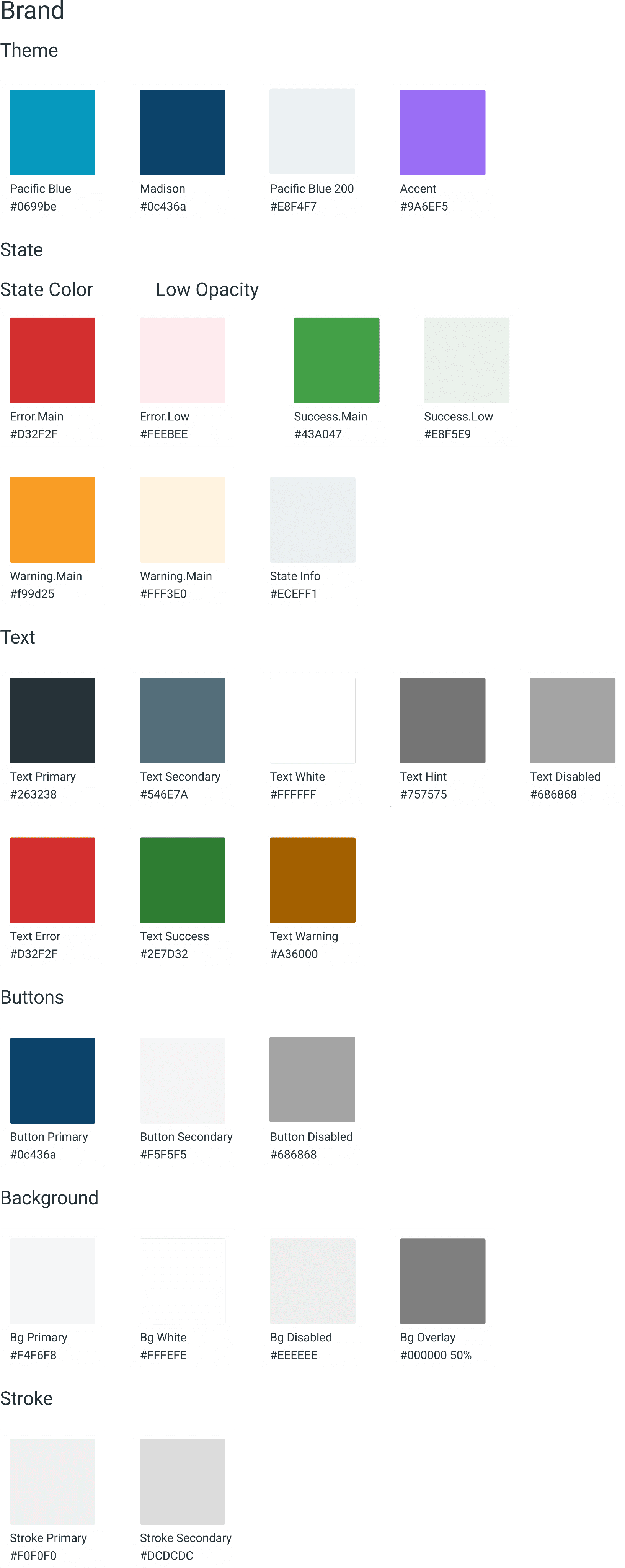
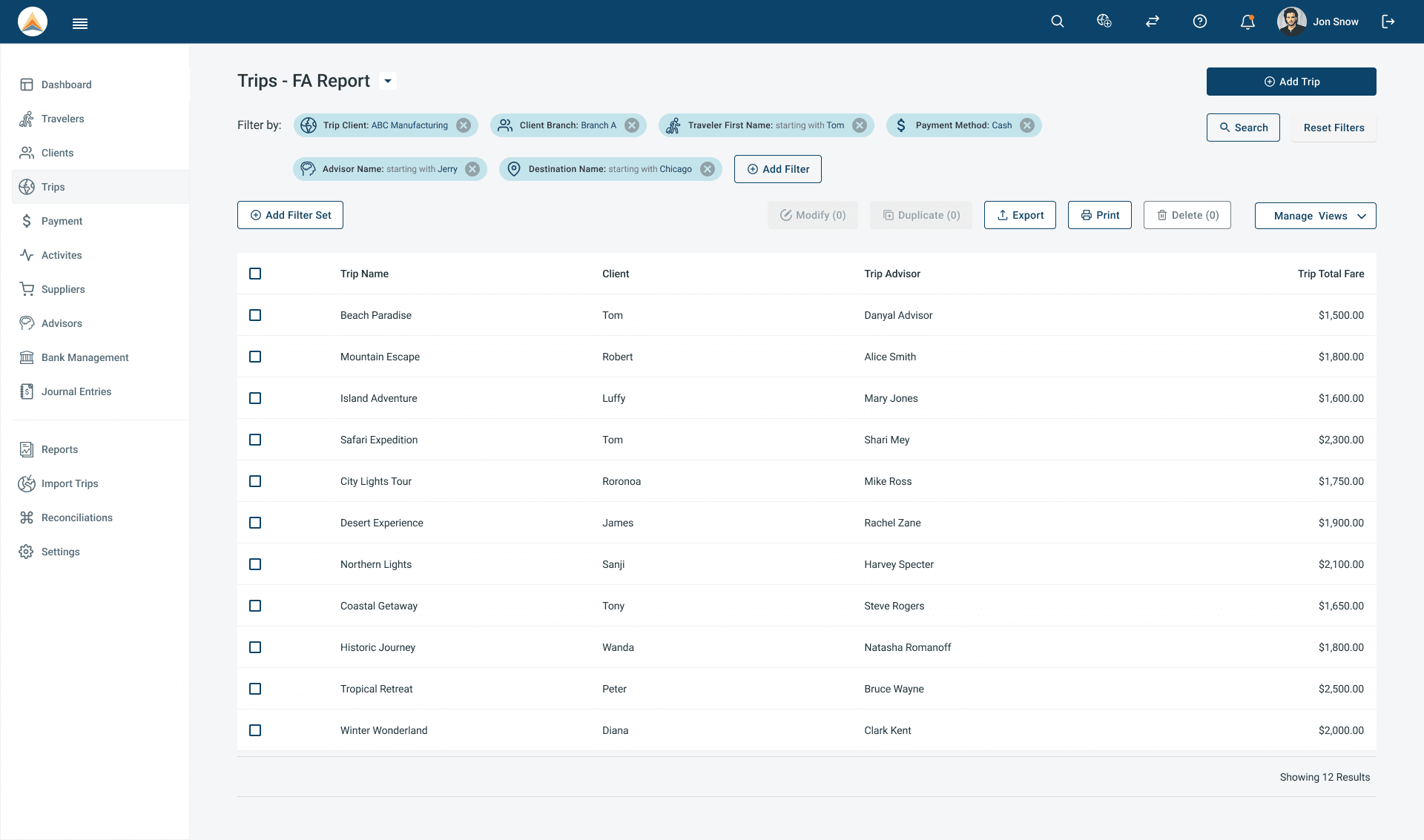
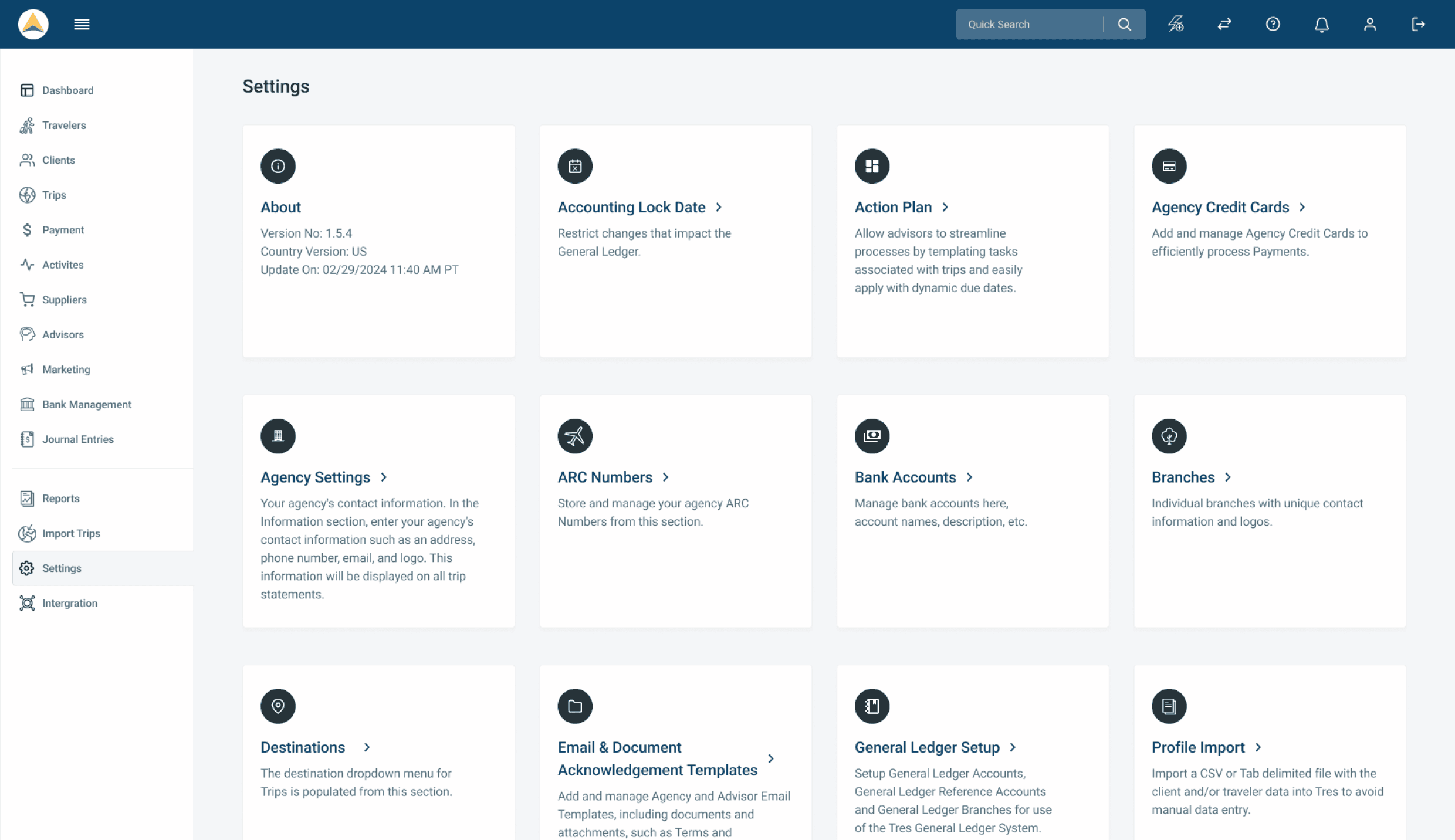
High-fidelity prototypes were then created using Figma, incorporating brand-appropriate color schemes and intuitive icons, making the system visually appealing and easy to navigate.
We explored two primary layout concepts for the redesigned platform:
A tab-based system where agents could manage clients, bookings, and communication in separate sections.
dashboard-centered layout where all interactions and tasks could be managed from a single unified view.
After testing both approaches, we finalized a hybrid layout that combined the best of both:
A dashboard-first view with modular tabs for deeper management - allowing agents to stay focused while still accessing detailed tools when needed.
Developed mid-fidelity wireframes that showcased the new dashboard, highlighting key features
High-fidelity prototypes were then created using Figma, incorporating brand-appropriate color schemes and intuitive icons, making the system visually appealing and easy to navigate.
Wireframing & Structure
Information Architecture
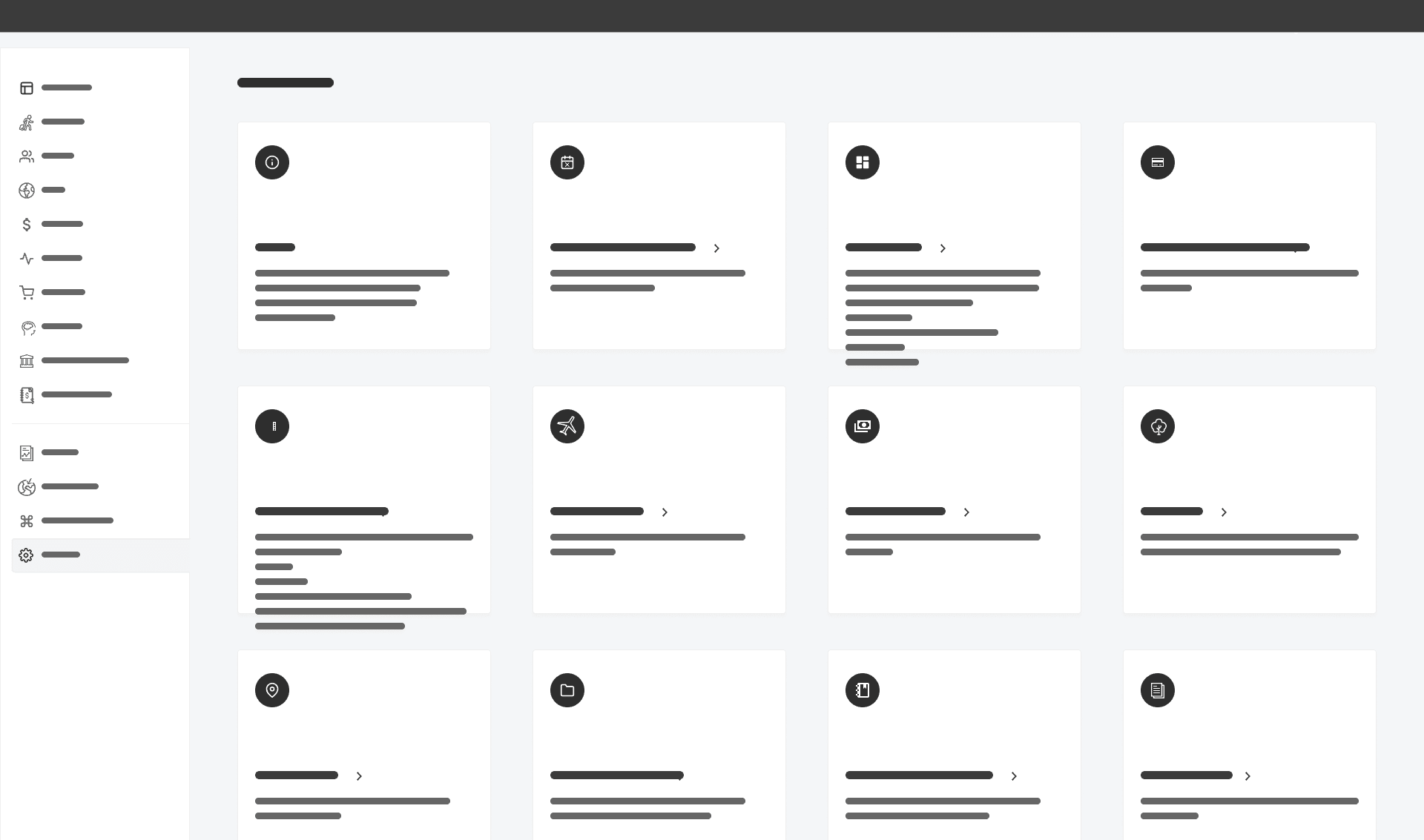
The original system had an overly complex IA that buried critical features deep within multiple menus and tabs, making it hard for agents to efficiently manage their tasks.
The original system had an overly complex IA that buried critical features deep within multiple menus and tabs, making it hard for agents to efficiently manage their tasks.
We restructured the information architecture to focus on:
We restructured the information architecture to focus on:
1.
1.
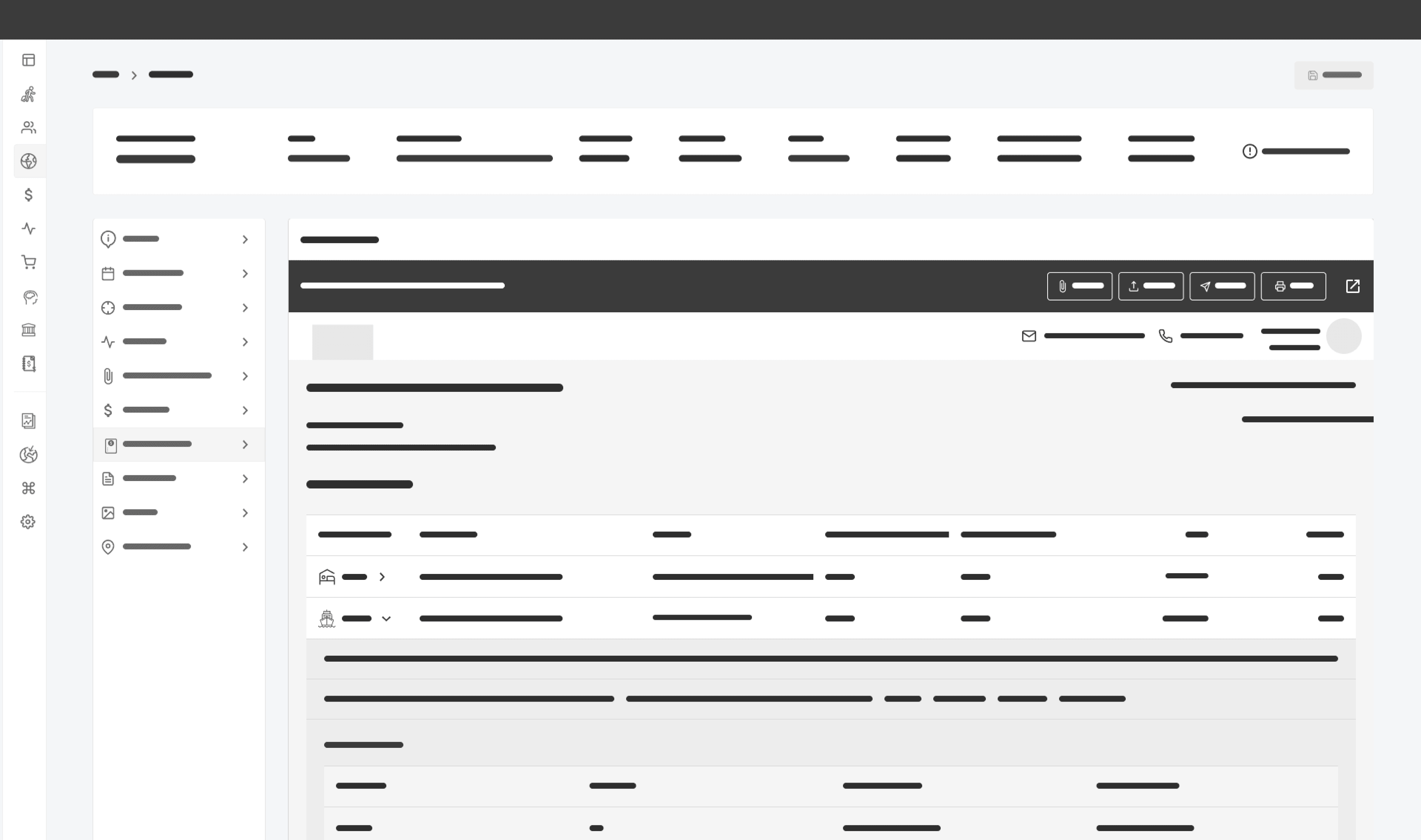
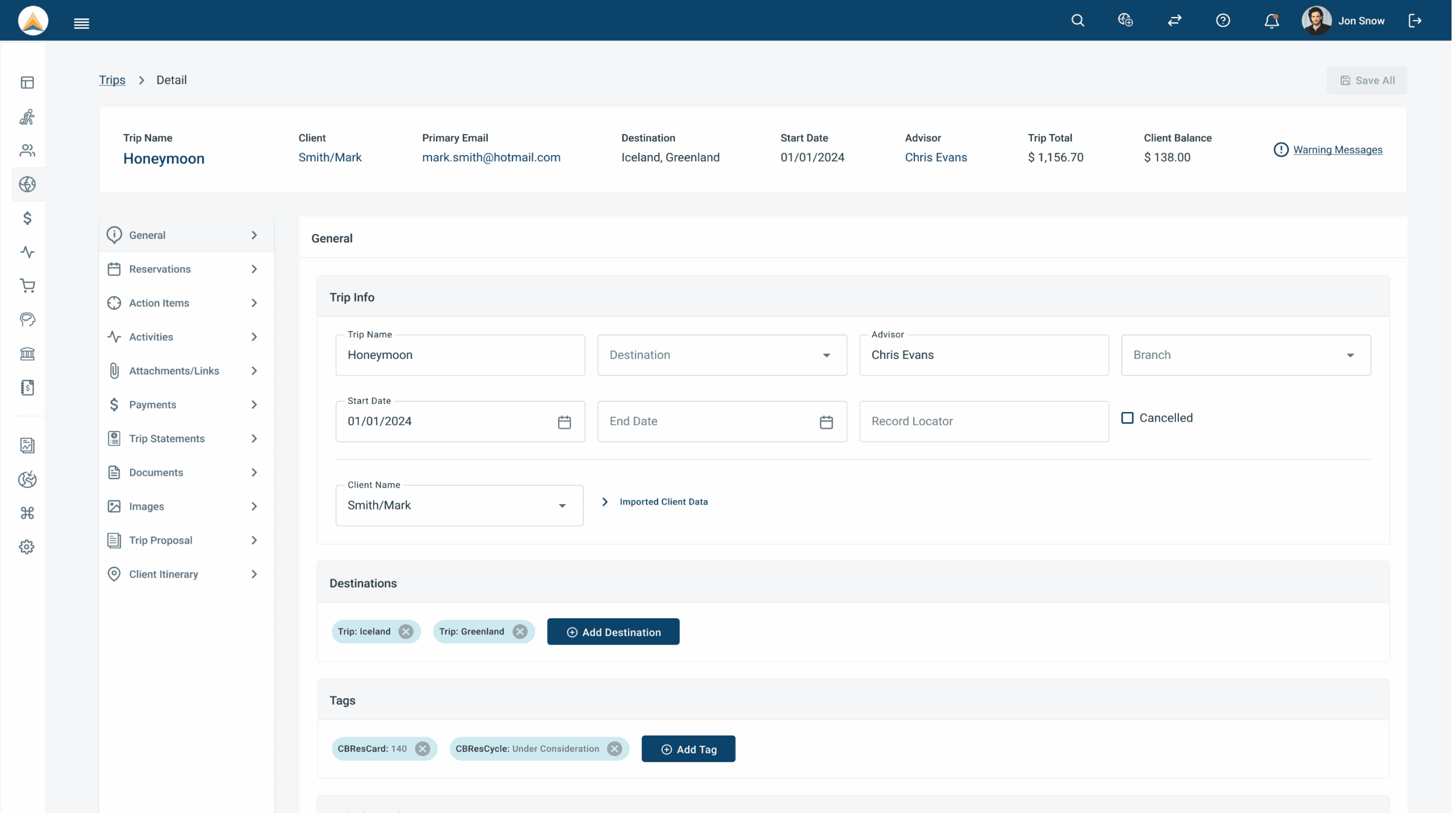
Unified Client Profiles: Each client’s data, from their personal information and preferences to booking history and communications, was centralized in one place.
Unified Client Profiles: Each client’s data, from their personal information and preferences to booking history and communications, was centralized in one place.
2.
2.
Task-Centric Dashboard: The new IA emphasized a dashboard-first design, where agents could see pending tasks (e.g., follow-ups, confirmations) at a glance.
Task-Centric Dashboard: The new IA emphasized a dashboard-first design, where agents could see pending tasks (e.g., follow-ups, confirmations) at a glance.
3.
3.
Simplified Navigation: The core functionalities were grouped logically into main sections
Simplified Navigation: The core functionalities were grouped logically into main sections
4.
4.
Global Features in Sidebar: The new layout introduced a sticky sidebar with always-accessible global features like
Global Features in Sidebar: The new layout introduced a sticky sidebar with always-accessible global features like
Wireframes
Wireframing & Structurea
Visual & Interaction Design
Visual & Interaction Design
Design System
2000+ Screens
2000+ Screens
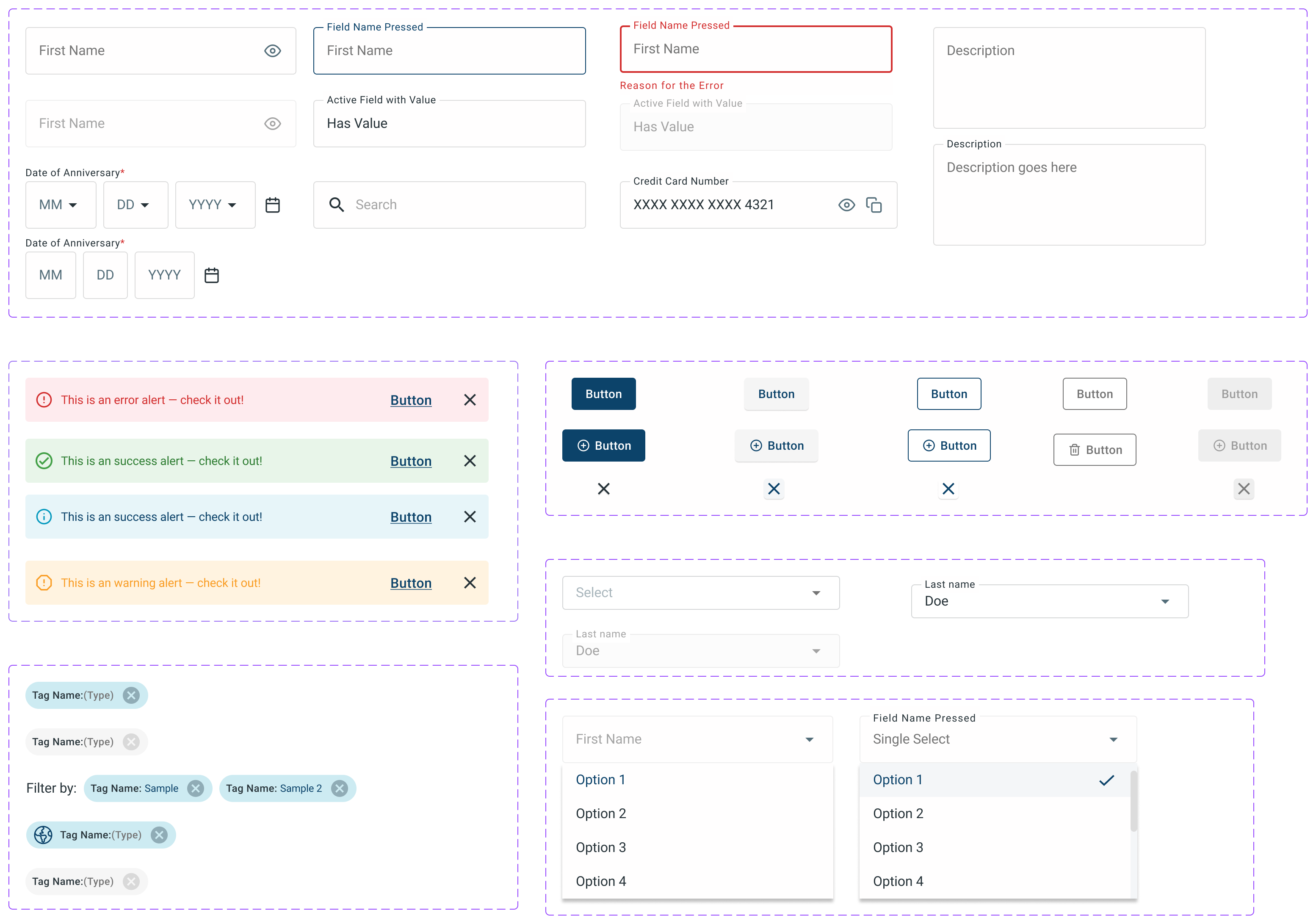
700+ Components
700+ Components
40+ Styles
40+ Styles
Font Style
Font Style
Roboto
Roboto
Roboto
Theme Colors
Theme Colors
Components
Components
High-Fidelity Screens
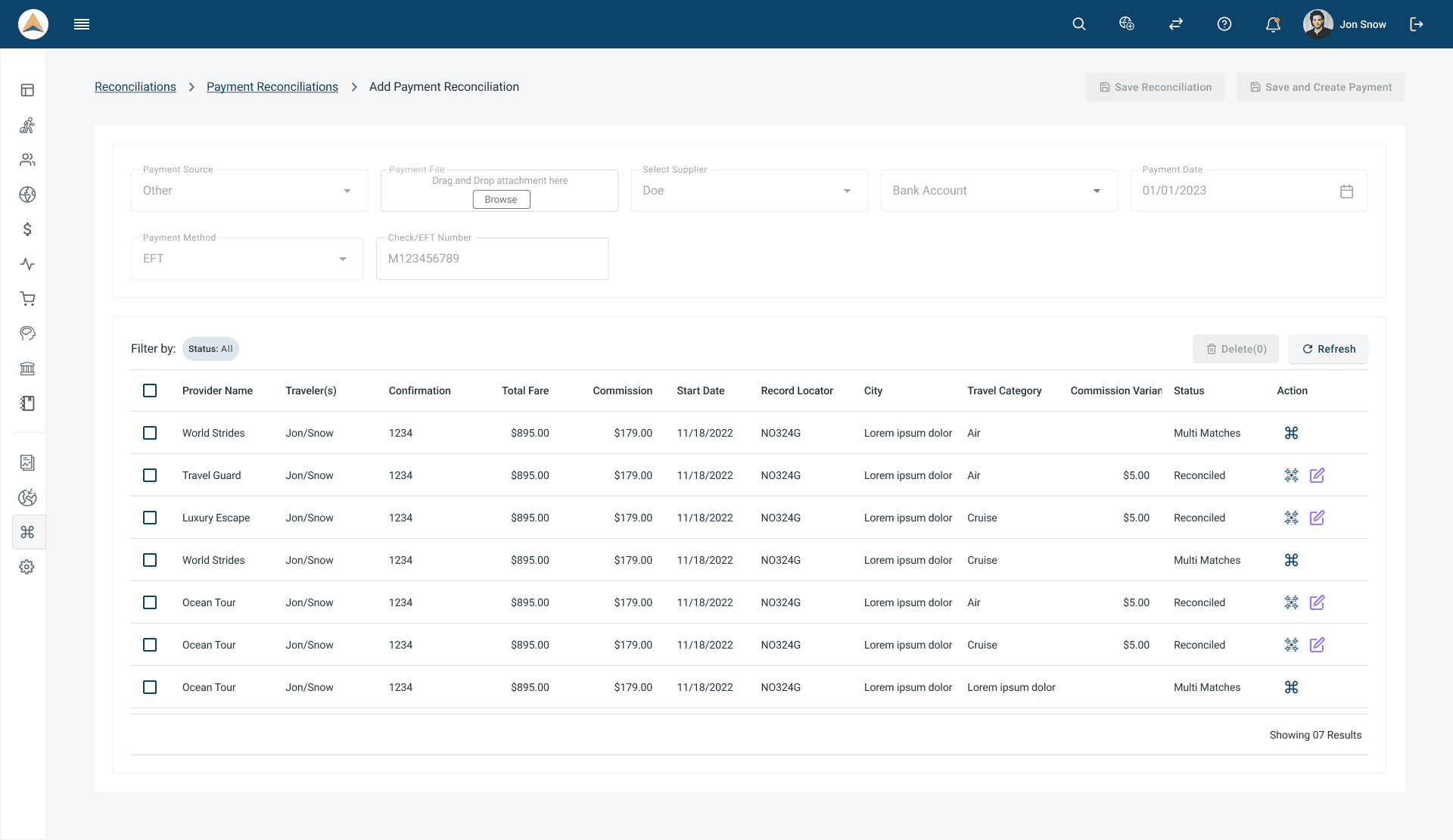
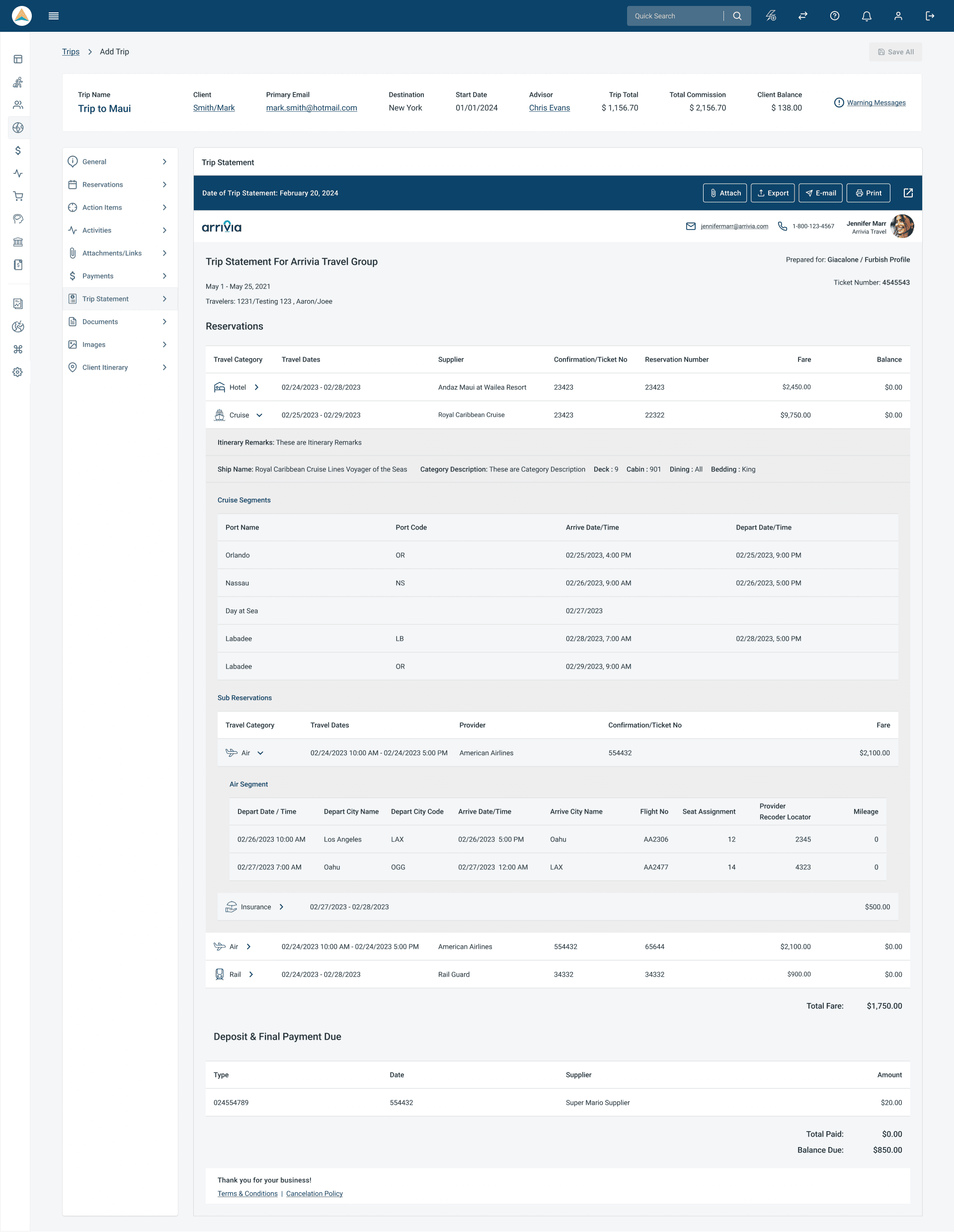
Navigation

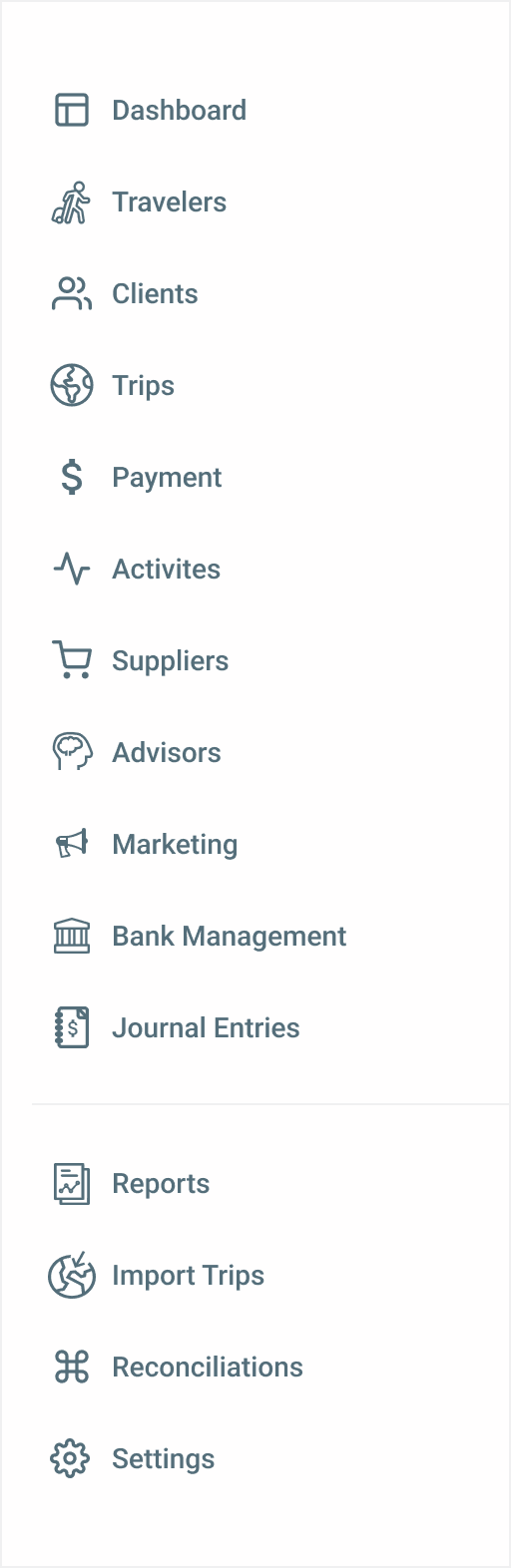
This allowed agents to jump between core tasks without navigating away from critical screens.
Navigation
This allowed agents to jump between core tasks without navigating away from critical screens.
Prototyping and Testing
Prototype
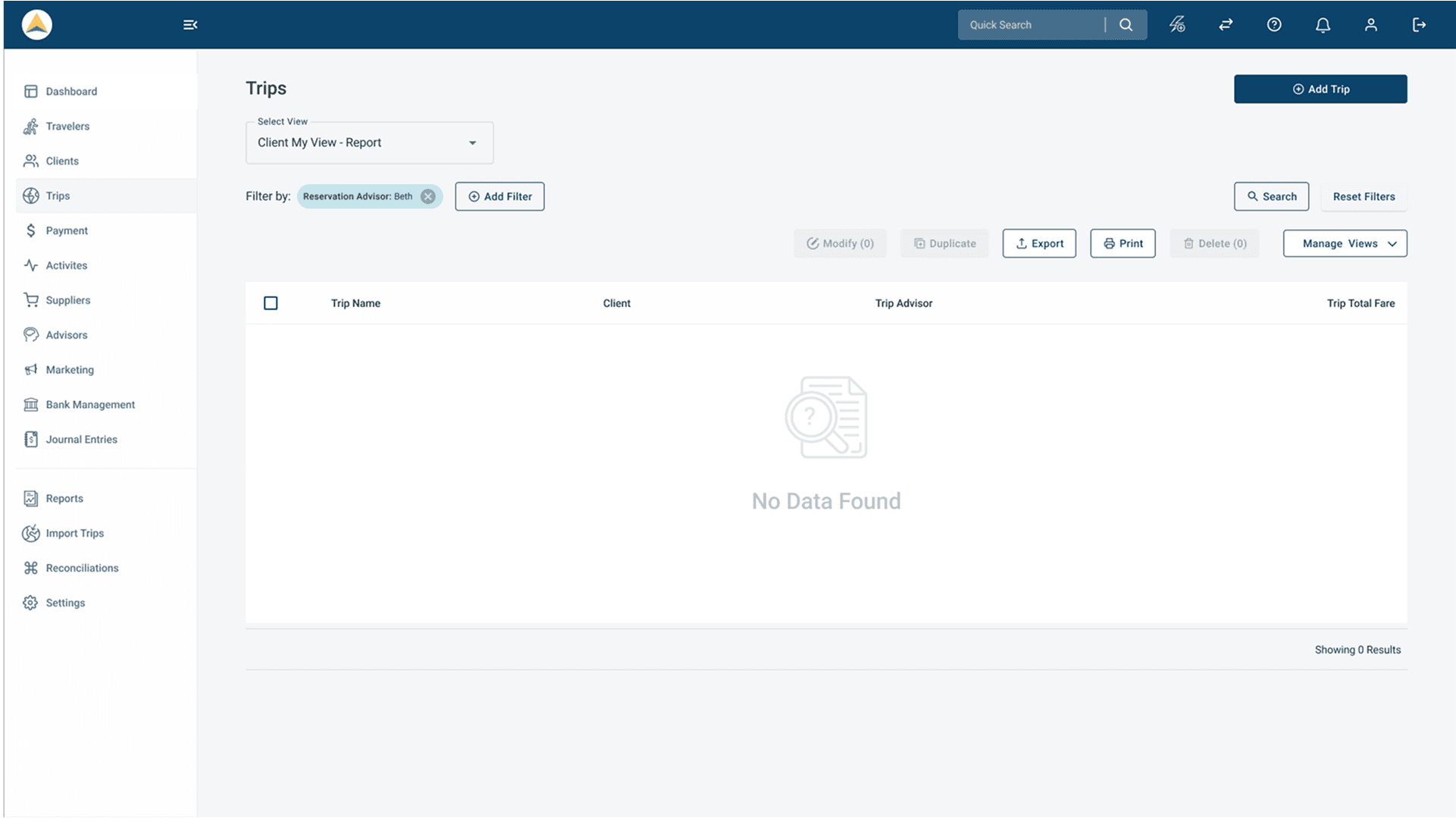

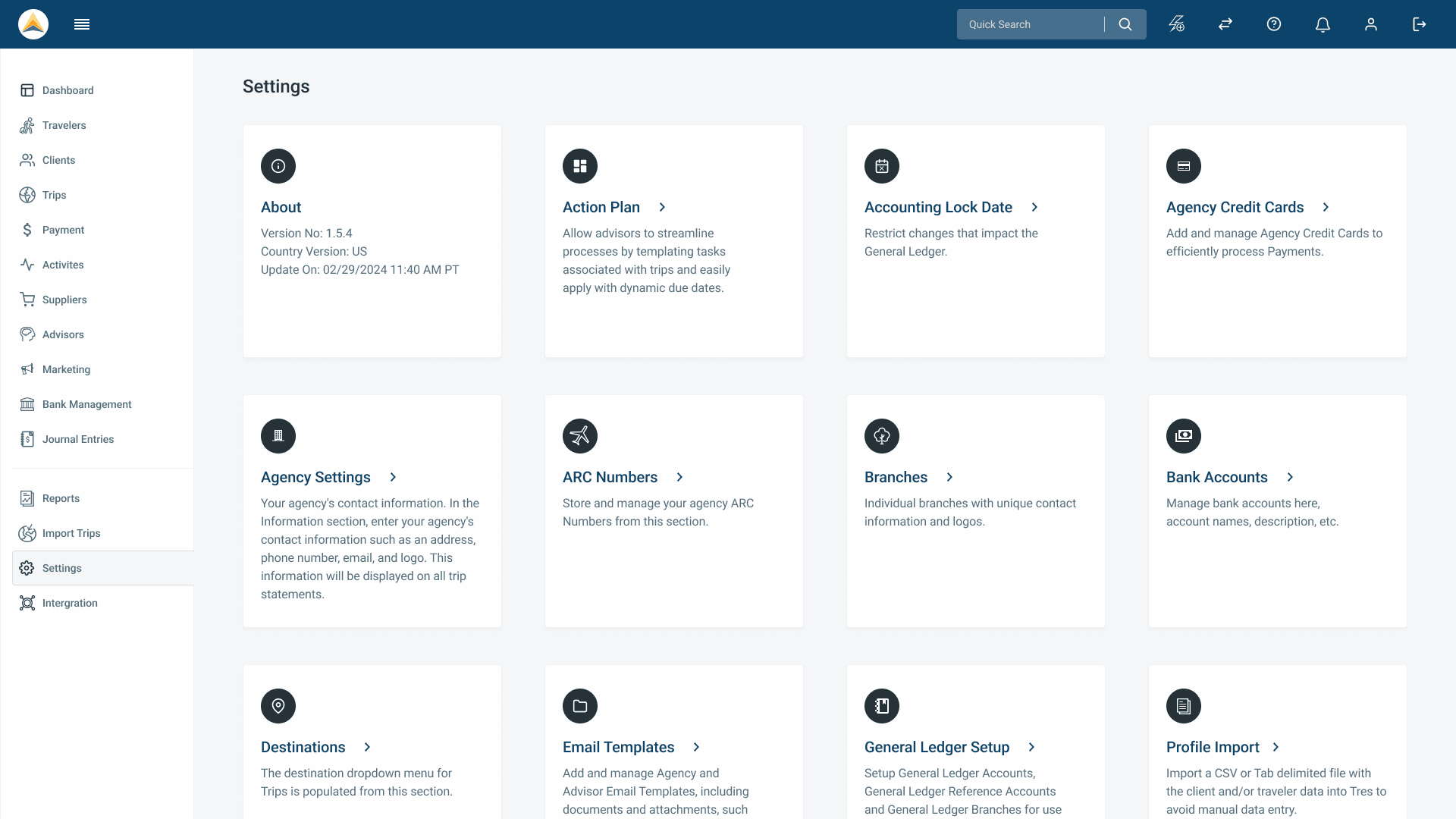
Usability Testing & Iteration
Conducted usability testing with 6 travel agents, asking them to complete tasks such as:
Conducted usability testing with 6 travel agents, asking them to complete tasks such as:
Creating a new client profile and adding booking details. Scheduling and sending a pre-travel reminder.
Managing client communication across email and SMS.
Creating a new client profile and adding booking details. Scheduling and sending a pre-travel reminder.
Managing client communication across email and SMS.
Feedback was mostly positive:
Feedback was mostly positive:
Agents appreciated the integrated communication tools but found the task system slightly rigid.
Some suggested that the automated workflow could be more customizable, allowing them to tweak reminders and follow-ups based on individual client needs.
Agents appreciated the integrated communication tools but found the task system slightly rigid.
Some suggested that the automated workflow could be more customizable, allowing them to tweak reminders and follow-ups based on individual client needs.
Iterated by:
Iterated by:
Customizing the task management system, allowing agents to tailor workflows to individual clients or bookings.
Adding a feature to link bookings directly to the calendar, making it easier to track upcoming travel dates without leaving the dashboard.
Customizing the task management system, allowing agents to tailor workflows to individual clients or bookings.
Adding a feature to link bookings directly to the calendar, making it easier to track upcoming travel dates without leaving the dashboard.
Final Implementation
Final Implementation
Final Outcome & Metrics
The revamped TRS CRM delivered:
Seamless integration with external booking engines, calendars, and communication tools, eliminating manual data entry.
Automation of key workflows, reducing administrative tasks by 50%.
Agents reported a 25% increase in client satisfaction, largely due to improved communication and follow-up at critical touchpoints.
Seamless integration with external booking engines, calendars, and communication tools, eliminating manual data entry.
Automation of key workflows, reducing administrative tasks by 50%.
Agents reported a 25% increase in client satisfaction, largely due to improved communication and follow-up at critical touchpoints.
Before & After Comparison
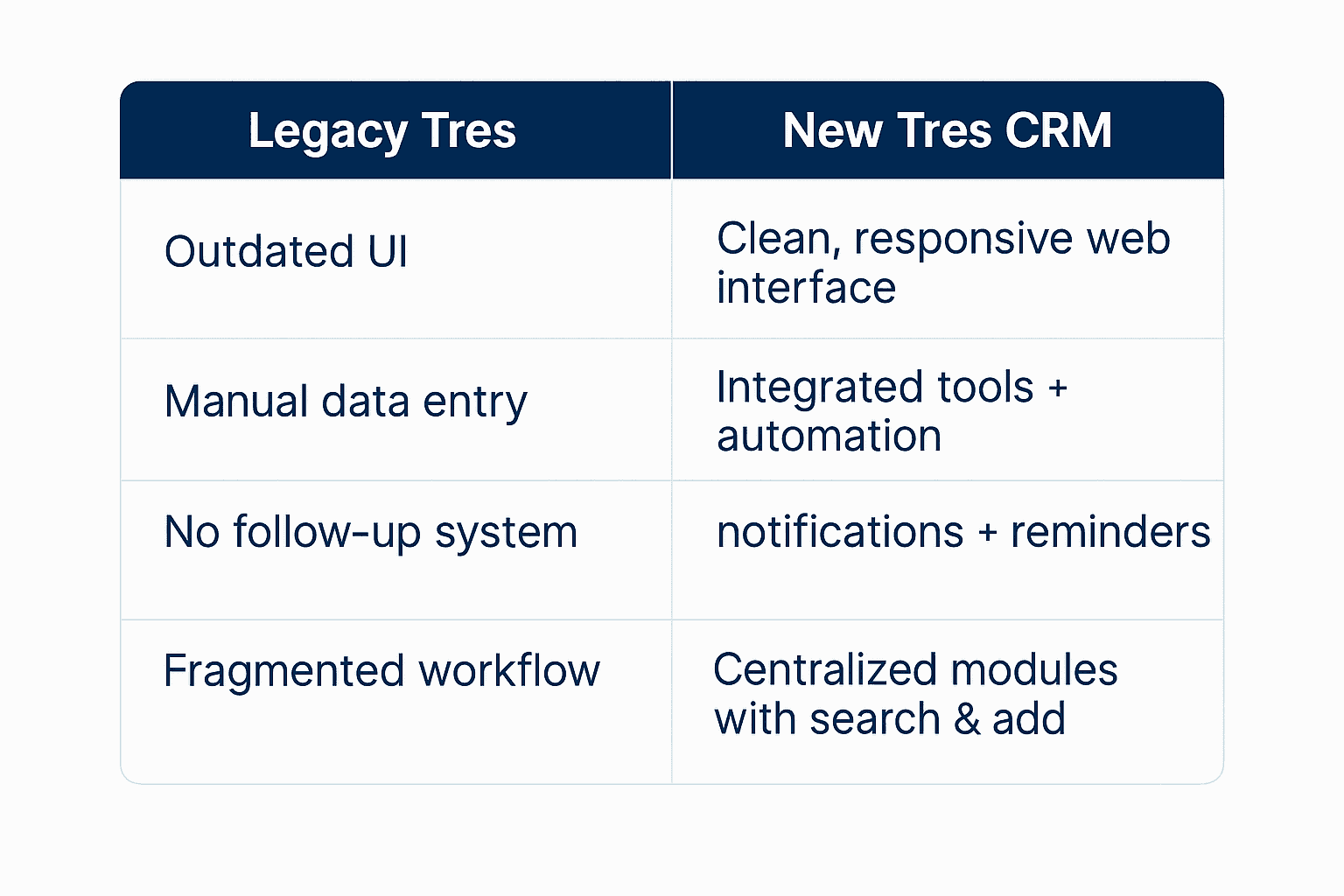

Challenges & Solutions
Challenges & Solutions
Challenge 1: Overwhelming Dashboard Layout
Challenge 1: Overwhelming Dashboard Layout
Problem: The initial dashboard was cluttered with too much information—notifications, tasks, client data, and bookings all displayed at once, causing cognitive overload and confusion.
Problem: The initial dashboard was cluttered with too much information—notifications, tasks, client data, and bookings all displayed at once, causing cognitive overload and confusion.

Solution: Applied information hierarchy principles by organizing content using progressive disclosure. Only the most critical information (e.g., upcoming tasks, new inquiries) was shown on the main dashboard, while secondary data (e.g., detailed client profiles, historical bookings) was hidden behind expandable sections or modals. This reduced visual noise and allowed users to focus on immediate tasks.
Solution: Applied information hierarchy principles by organizing content using progressive disclosure. Only the most critical information (e.g., upcoming tasks, new inquiries) was shown on the main dashboard, while secondary data (e.g., detailed client profiles, historical bookings) was hidden behind expandable sections or modals. This reduced visual noise and allowed users to focus on immediate tasks.
Challenge 2: Complex Navigation and Information Architecture
Challenge 2: Complex Navigation and Information Architecture
Problem: The navigation and information architecture of the original system was disjointed. Travel agents had to click through multiple tabs and menus to access core features like client information, itineraries, and communications, leading to inefficiency and frustration.
Problem: The navigation and information architecture of the original system was disjointed. Travel agents had to click through multiple tabs and menus to access core features like client information, itineraries, and communications, leading to inefficiency and frustration.
Solution: Conducted a card sorting exercise with travel agents to better understand how they grouped and accessed key tasks. Redesigned the information architecture by consolidating related functions (e.g., bookings, communications, tasks) into a unified client profile page, where agents could access everything related to a client without needing to navigate away. We introduced a sticky sidebar for global features like the task manager, ensuring important actions were always just one click away.
Solution: Conducted a card sorting exercise with travel agents to better understand how they grouped and accessed key tasks. Redesigned the information architecture by consolidating related functions (e.g., bookings, communications, tasks) into a unified client profile page, where agents could access everything related to a client without needing to navigate away. We introduced a sticky sidebar for global features like the task manager, ensuring important actions were always just one click away.
Challenge 3: Inconsistent Visual Hierarchy
Challenge 3: Inconsistent Visual Hierarchy
Problem: Agents struggled to distinguish between high-priority actions (e.g., follow-up reminders) and less urgent information. The early prototypes lacked a clear visual hierarchy, which made it difficult to quickly assess what needed immediate attention.
Problem: Agents struggled to distinguish between high-priority actions (e.g., follow-up reminders) and less urgent information. The early prototypes lacked a clear visual hierarchy, which made it difficult to quickly assess what needed immediate attention.
Solution: Applied consistent visual hierarchy principles, using typography, size, and color to differentiate between primary and secondary actions. For instance, urgent tasks were highlighted using a bright, bold color and larger font size, while supporting information (e.g., historical data or low-priority tasks) was displayed in a more muted tone and smaller text size. This ensured that agents could quickly assess and prioritize their tasks without confusion.
Solution: Applied consistent visual hierarchy principles, using typography, size, and color to differentiate between primary and secondary actions. For instance, urgent tasks were highlighted using a bright, bold color and larger font size, while supporting information (e.g., historical data or low-priority tasks) was displayed in a more muted tone and smaller text size. This ensured that agents could quickly assess and prioritize their tasks without confusion.
Challenge 4: Customization and Flexibility in User Workflows
Challenge 4: Customization and Flexibility in User Workflows
Problem: The legacy system’s rigid workflow didn’t account for the diverse needs of different travel agents. Many agents had their own preferences for managing clients, and the automated workflows were seen as too generic.
Problem: The legacy system’s rigid workflow didn’t account for the diverse needs of different travel agents. Many agents had their own preferences for managing clients, and the automated workflows were seen as too generic.
Solution: Built customizable workflows into the CRM, allowing agents to tailor the automation features (e.g., when reminders are sent, how frequently clients receive updates) to their specific needs. We also added a drag-and-drop interface to let users personalize their dashboard, enabling agents to prioritize the sections and features they interacted with the most.
Solution: Built customizable workflows into the CRM, allowing agents to tailor the automation features (e.g., when reminders are sent, how frequently clients receive updates) to their specific needs. We also added a drag-and-drop interface to let users personalize their dashboard, enabling agents to prioritize the sections and features they interacted with the most.
Challenge 5: Information Overload in Client Profiles
Challenge 5: Information Overload in Client Profiles
Problem: In the original system, client profiles were overwhelming, with too much data presented without clear organization. Agents found it hard to quickly locate important details like recent bookings, preferences, or notes.
Problem: In the original system, client profiles were overwhelming, with too much data presented without clear organization. Agents found it hard to quickly locate important details like recent bookings, preferences, or notes.
Solution: Reorganized the client profile structure by breaking down information into logical sections: personal details, booking history, communication logs, and travel preferences. We used clear tabbed navigation within the profile to separate these categories, allowing agents to switch between different sets of data effortlessly. Important updates (e.g., upcoming travel dates or outstanding tasks) were featured at the top of the profile to prioritize actionable information.
Solution: Reorganized the client profile structure by breaking down information into logical sections: personal details, booking history, communication logs, and travel preferences. We used clear tabbed navigation within the profile to separate these categories, allowing agents to switch between different sets of data effortlessly. Important updates (e.g., upcoming travel dates or outstanding tasks) were featured at the top of the profile to prioritize actionable information.
Next Steps
Expand integrations to include social media channels, allowing agents to capture inquiries and interactions from platforms like Facebook and Instagram directly within the CRM.
Implement a machine learning feature to provide agents with insights into client preferences based on past behavior, helping them offer more personalized travel options.
Next Steps
Expand integrations to include social media channels, allowing agents to capture inquiries and interactions from platforms like Facebook and Instagram directly within the CRM.
Implement a machine learning feature to provide agents with insights into client preferences based on past behavior, helping them offer more personalized travel options.
Conclusion
Revamping Tres from a standalone system into an integrated, modern CRM helped travel agents streamline their processes, automate time-consuming tasks, and offer better client experiences. The inclusion of touchpoint analysis allowed us to tailor the CRM to the exact moments when agents needed to interact with clients, ensuring a smooth workflow and higher satisfaction rates.
Conclusion
Revamping TRS from a standalone system into an integrated, modern CRM helped travel agents streamline their processes, automate time-consuming tasks, and offer better client experiences. The inclusion of touchpoint analysis allowed us to tailor the CRM to the exact moments when agents needed to interact with clients, ensuring a smooth workflow and higher satisfaction rates.